Home >> China Attractions >> Chengdu >> About Chengdu

Chengdu

Located in the west of Sichuan Basin, Chengdu has a population of over 11 million. Dating back to at least the fourth century B.C., the city has a long history and occasionally served as a regional capital for various kingdoms. The abundance of greenery in Chengdu makes it an enjoyable place to wander on foot. There are miles upon miles of bustling side streets to explore, where you'll stumble upon markets, commercial districts, underground shopping malls, countless tiny restaurants specializing in Sichuan snacks and old men walking their song birds. You'll also encounter the city's artisans: small-time basket-weavers, cobblers, tailors and snack hawkers who swarm the streets and contribute to Chengdu's lively atmosphere.
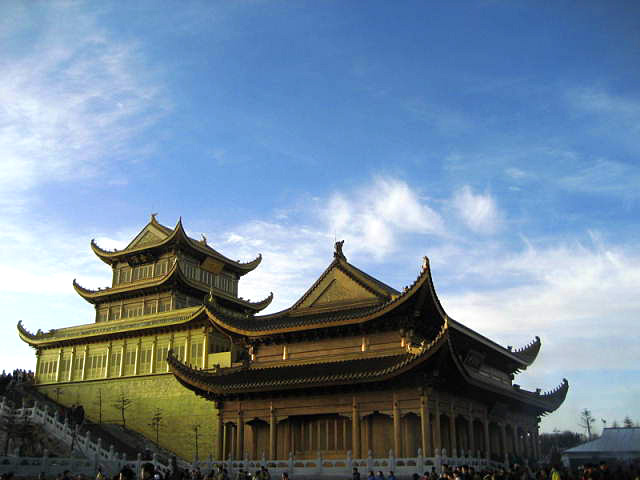
Visitors can enjoy delectable Sichuan cuisine, known around the world for its spiciness. Despite its fiery cuisine, Chengdu is one of the most laid-back regions of China, where locals find time to shop, cook, eat, and spend hours relaxing and socializing in teahouses. All around, it is one of China's more intriguing cities.

Chengdu History

Chengdu's history may date back over 3,600 years. It is believed that in the early part of the 4th century BC, the Shu State moved its capital to the site of present-day Chengdu. During the Qin Dynasty, the city was founded, a protective 25-meter tall wall was built, and the city's reputation as a commercial hub and center for arts and crafts trading became established.

During the Western Han Dynasty, the city was known as Brocade City because of the silk brocade industry thriving there. By the Song Dynasty, the entire city consisted of five rather large commercial centers plus a large market where people could sell their goods.  There were also a number of popular night markets. The city was a vital political and commercial center for southwest China and has been the location of government for Sichuan province since the Yuan dynasty.


When World War II hit China, the city rapidly developed into a cultural and industrial hub. The Nationalist government fled the Japanese and located in Sichuan province, attracting countless workers, traders, and businessmen to the city. This flow of people to Chengdu turned it into what it is today, an elite industrial city.

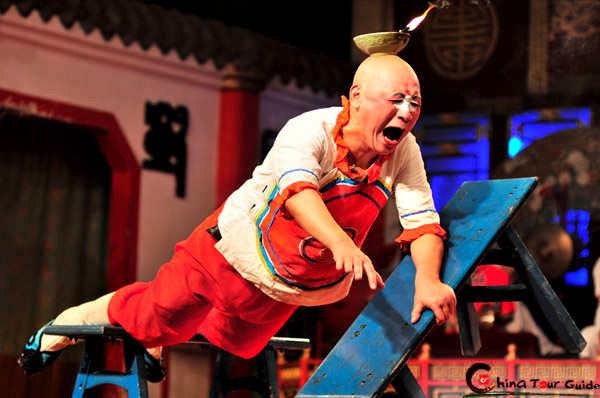
Chengdu has long been known for its handicrafts. From the Warring States period to the Han Dynasty, its lacquer wares had particular fame, and the city has been synonymous with silk and silk brocade since for millennia. Most of China's silk trade with the Middle East up to the time of the Tang dynasty was made possible with silk from Chengdu. The city has a great history of openness and has thrived on its ability to absorb and promote a variety of cultural influences from different times and eras. All of the influences contribute to the Sichuan's unique achievements, from opera, painting, and poetry to Sichuan cuisine and snacks.
Recommended China Tours with Chengdu
CTG-14: 15 days China's Best Treasure From $2157
  (Beijing - Xian - Lhasa - Chengdu - Shanghai)
CTG-11: 12 days China Experience Tour From $1774
  Beijing – Xi'an – Chengdu – Guilin – Suzhou – Shanghai
HRC-TMR02: 17 days Memorable China Experience From $2864
  (Beijing - Lhasa - Chengdu - Lijiang - Kunming - Guilin - Shanghai)

Chengdu Transportation

Getting to Chengdu

City Orientation By Air By Train By Bus

City Orientation

Compared with other major Chinese cities, Chengdu is simpler to navigate on foot. The heart and exact center of the city is Tianfu Square. Three ring roads then form concentric circles around Tianfu Square. Renmin Road bisects the ring roads on a north/south axis. To walk from Tianfu Square to the southern part of the first ring road takes about 25-30 minutes. Most important sites are within the second ring road and many bars, clubs, and restaurants are concentrated in the south end of the city between the first and second ring roads. Unfortunately, Chengdu's street names change practically every kilometer, so it is important to familiarize yourself with landmarks such as Tianfu Square, the train stations, and the ring roads.
Top

By Air
The Chengdu Shuangliu International Airport is the sixth largest in China, and operates services to 70 domestic cities and 20 foreign cities, including Los Angeles, London, Sydney, Melbourne, Amsterdam and Delhi. The airport is situated 20 km (12.4 m) from the city center: a cab from the city center will cost around RMB 60. Shuttle buses also operate from the city and are a more economical option, costing around RMB 10.
Top

By Train
The Chengdu Railway Station is the largest in southwest China. It is linked directly to major cities across the country including: Beijing, Shanghai, Kunming, Chongqing and Xi'an. Tickets can be bought in advance from any of the city's travel agencies. Hotels and hostels also arrange travel for a small surcharge, which allows visitors to avoid waiting in line at the station or trying to find their own booking agent. The railway station sits in the north of the city and can be reached from the city by bus or by taxi.
Top

By Bus
Chengdu has six long-distance bus stations, serving destinations across Sichuan and Tibet, as well as a variety of tourist attractions in the close vicinity including Yibing, Emei Mountain and Leshan Mountain. Visitors should check in advance which station their chosen destination can be reached from.
Top

About Us | Contact Us | FAQ | Privacy Policy | Terms and Conditions | Links | Sitemap
Guide for China tour, offers most value & amazing experience. In China, you can rely on us
Copyright © 2001 - 2012. All Rights Reserved to ChinaTourGuide.Com