Top China Tours
- 8 Days China Highlights
- 8 Days Exploration of Natural Villages in Guizhou
- 8 Days Tibet Inspiring Tour to Mt. Everest Base Camp
- 9 Days Golden Triangle Tour
- 11 Days China Explorer & Cruise
- 12 Days China Signature Tour
- 14 Days China Dreamland Tour and Tibet Train Exploration
- 14 Days Imperial Cities Tour
- 14 Days Silk Road Adventure
- 18 Days China Dream Tour

- China :+86-20-37251788
- Skype: Hrctravel
-

- Email: booking@chinatourguide.com
5 Easy Booking Steps
- Send inquiry
-

- Get answer within 24 hours
-
- Make changes for free
-
- Agree to the final proposal
-
- Arrange Payment
Home >> China Tour >> China Discovery Tours
14 Days Imperial Cities Tour
From
$
$

- Duration:
- Destinations:
(Forbidden City, Mutianyu Great Wall -Yungang Caves -Pingyao Ancient City -Terracotta Warriors -The Bund) - Departure date:
- Tour Code: CTG-23
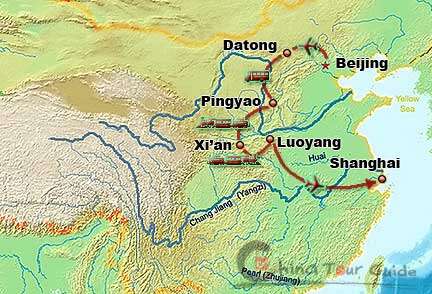 Travel route of 14 Days Imperial Cities Tour
-
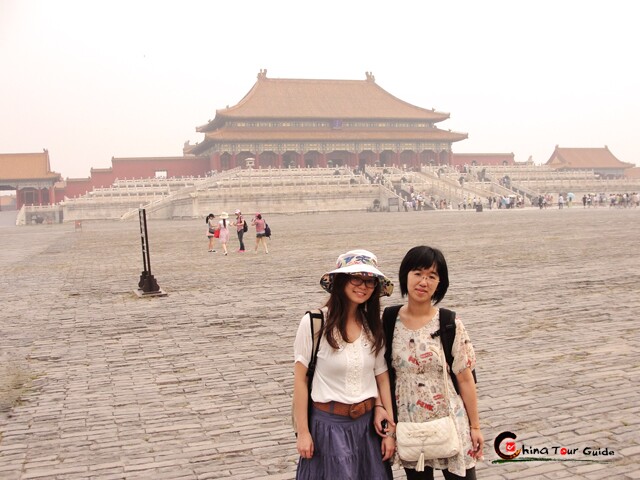 Forbidden City, Beijing
 -
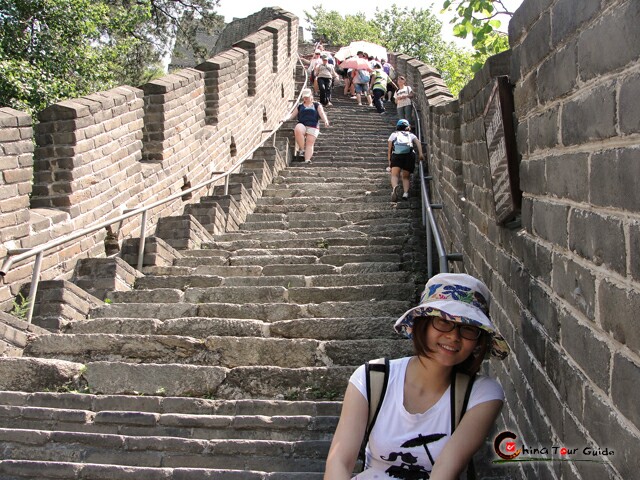 Mutianyu Great Wall, Beijing
 -
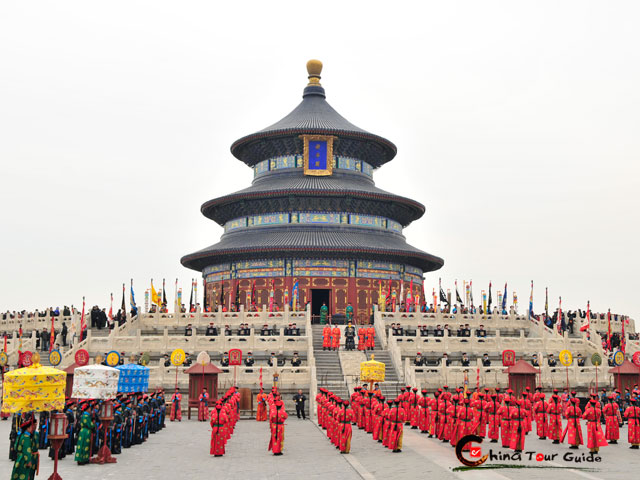 Heaven worshipping ceremony held at Temple of Heaven
 -
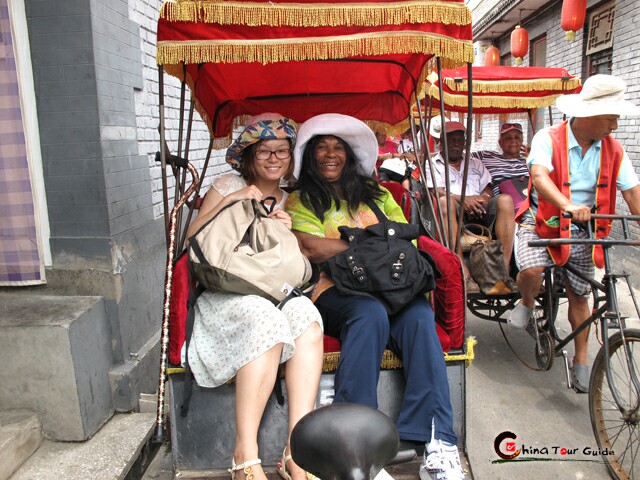 Exciting Hutong tour by rickshaw
 -
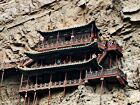
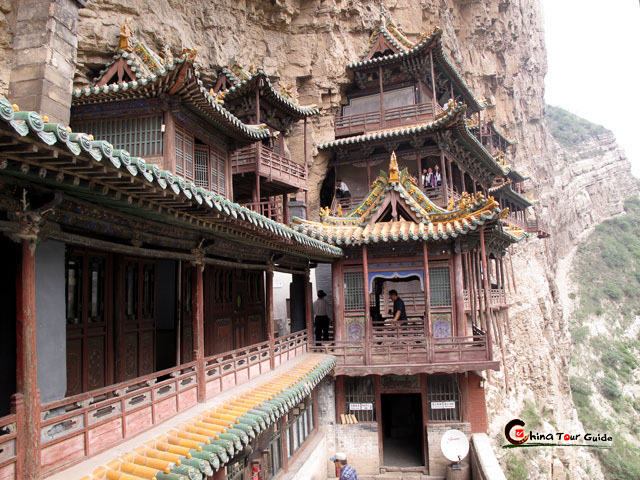 Hanging Temple, Datong
 -
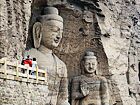
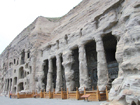
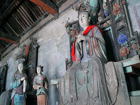
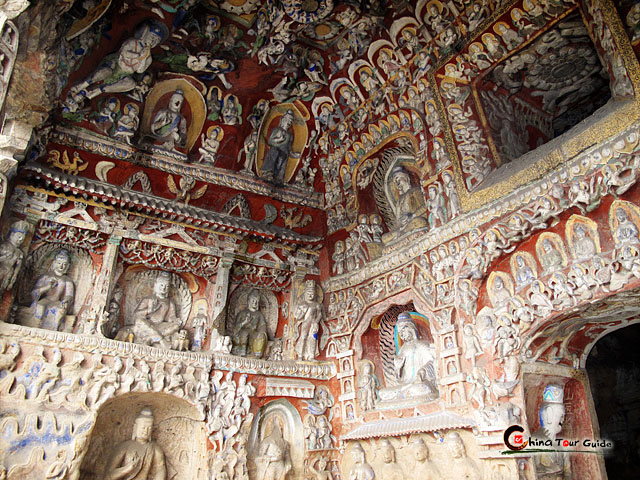 Yungang Caves, world of Buddhist sculptures
 -
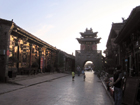
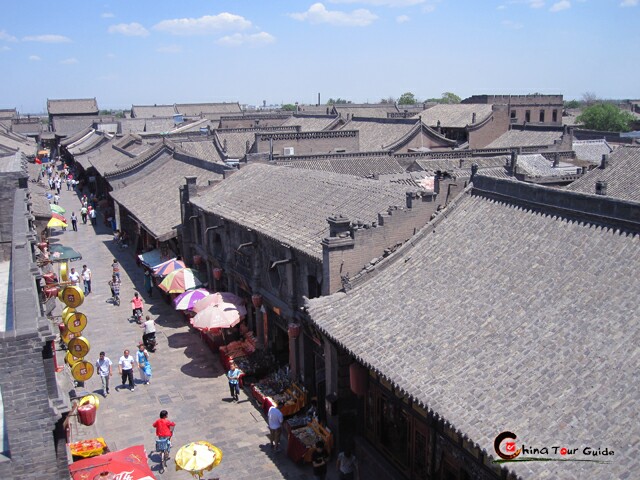 Pingyao Ancient City
 -
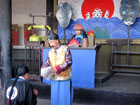
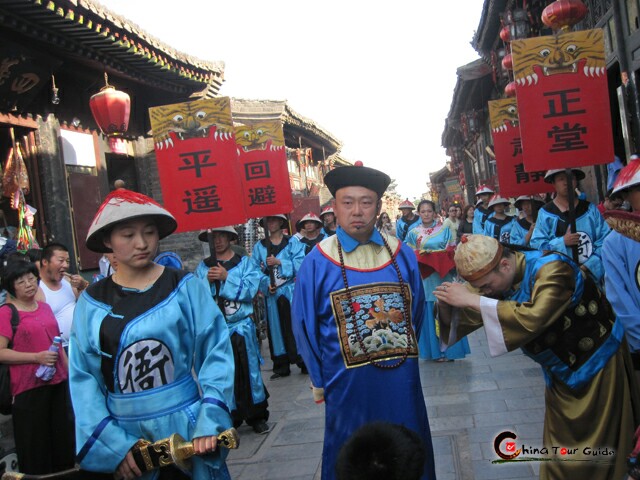 Performance of ancient official patrol in Pingyao Ancient City
 -
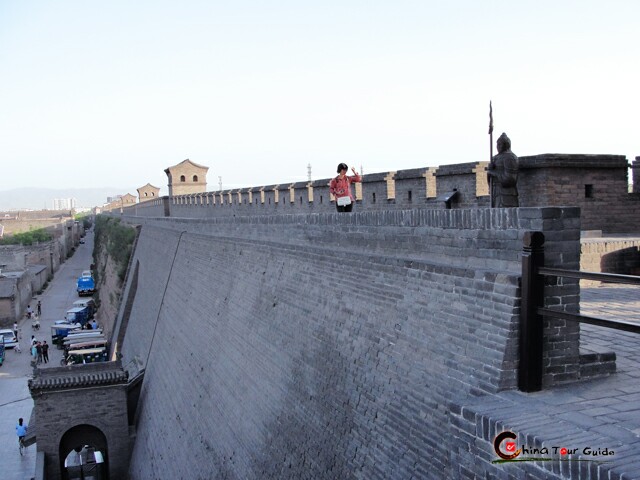 Strolling on Ancient City Wall of Pingyao
 -
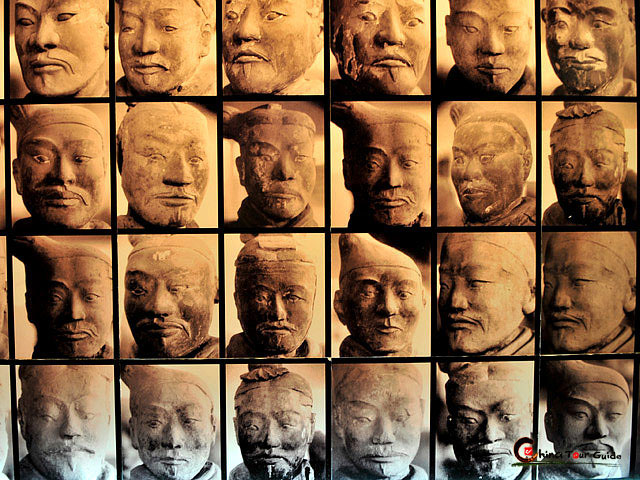 Different Expressions of the Terracotta Warriors
 -
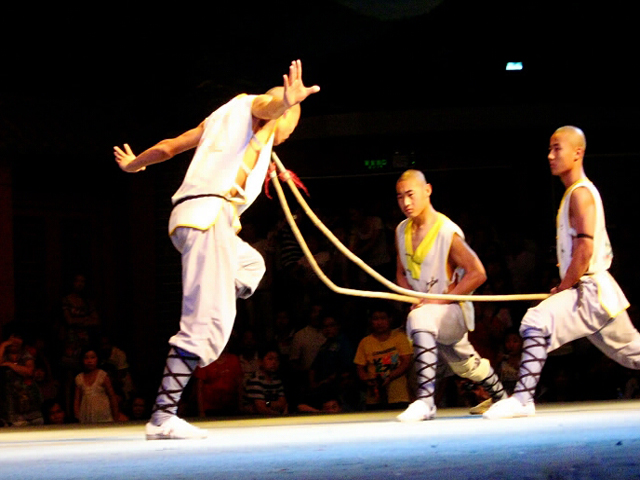 Kungfu show performed by the warrior monks in Shaolin Temple
 -
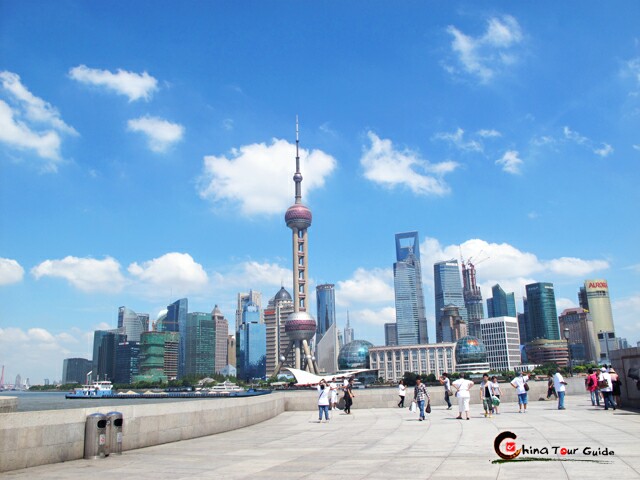 Magnificent Oriental Pearl Tower and skyline of Shanghai new area
 -
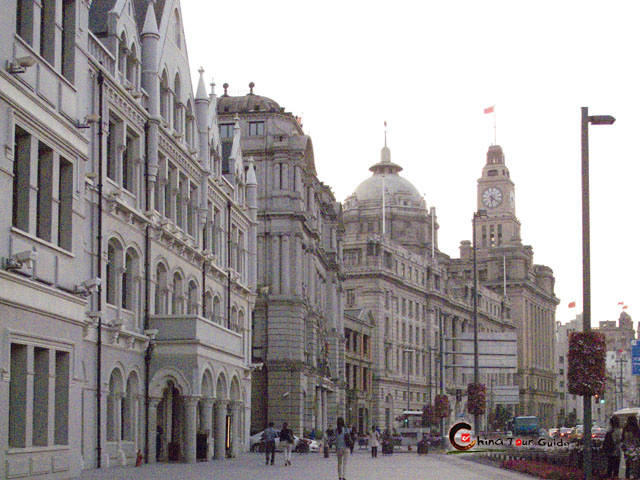 Awesome European-style old buildings along The Bund
 -
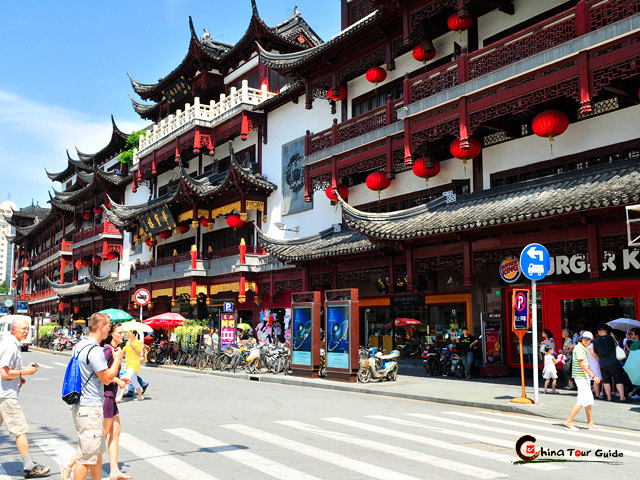 Traditionally decorated shops in Yuyuan Market, Shanghai
 -
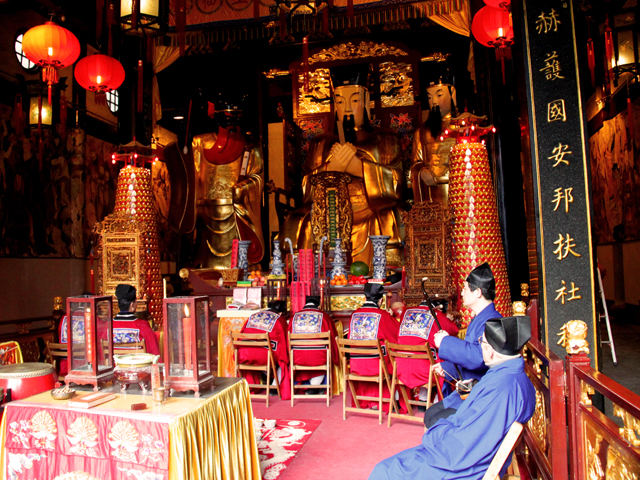 Taoists praying in the main hall of City God Temple of Shanghai
Tour Description

A top choice for you to explore the mysterious royal life and the populace culture of China first hand, as we take you to 3 major ancient capital cities (Beijing, Xi'an and Luoyang), the well-kept ancient town Pingyao and the most modern city Shanghai. You'll enjoy the eye-opening experience in visiting the royal palace, mausoleum, garden, temple, market and military fortifications.
Worry-free tour with Low price Guarantee, satisfy your curiosity about history and culture of China.
One-stop service, incl. tour guide, hotels, meals, transportation, attraction admissions and insurance, etc.
Caring, experienced local guide & driver will be of great help to ensure your safety and comfort on the way.
Day 1 Arrive in Beijing : Pick-up, check-in and free-time activities
| Today's Activities | The guide will meet you outside the customs of Beijing Airport after you clear the customs, and then transfer you to the downtown hotel. The rest of the day is flexible for your will, have a rest at the hotel or take a walk around the famous Wangfujing Pedestrian Street enjoying the tasty Beijing snack there. | ||||||||||||||||
| Highlights |
|
Day 2 Beijing ( Breakfast, Lunch )
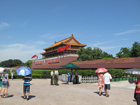
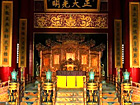
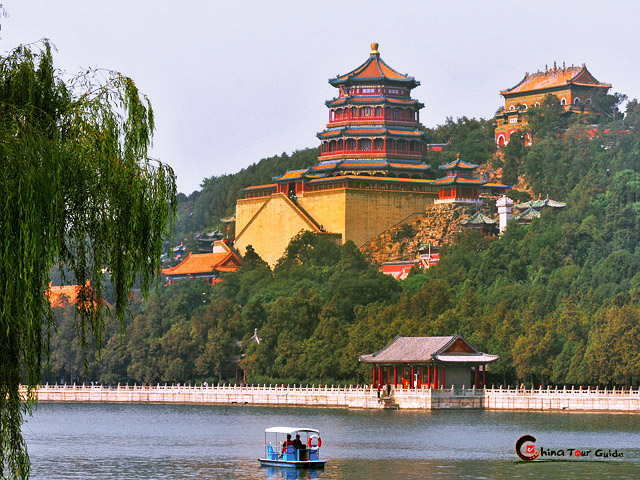
| Today's Activities | You’ll marvel at Tian'anmen Square, the largest square in the world and all the lofty jade stone bridges, moats, monuments, ornamental columns, stone lions, etc. Later walk northward and you reach Forbidden City. The largest and best-preserved imperial palace in China vividly showcases a whole set of the royal life. You’ll be shown around several main halls like the Hall of Supreme Harmony. Have a good view of the emperor’s chair, sculpture of mythical beasts, eave decoration and the like, you can touch some daily routine of the ancient Chinese emperors, courtiers and princesses. Later you'll tour Summer Palace, the royal garden. You can keenly feel the imperial grandeur when strolling across the 17-arch bridge, huge Kunming lake and the 728-meter-long painting-rich corridor. |
||||||||||||||||
| Highlights |
|
Day 3 Beijing ( Breakfast, Lunch )
Today's Activities |
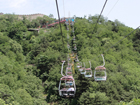
After breakfast at hotel, you will have an excursion to the Mutianyu Great Wall. By roundtrip cable car you can feast on this vital section of the world famous China Great Wall. Mutianyu not only boasts a surprisingly long history of over 1400 year but sport a special structure of three watchtowers on end.
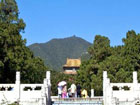
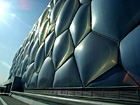
Afterwards, you will visit the most famous tomb of Ming Tombs - Changling. The tomb is inhumed with the 3rd emperor of Ming Dynasty (1368-1644) Zhu Di and his queen. Its tremendous scale and perfect degree of maintanence well fits the great achievement Emperor Zhu Di secured during his reign over China. On the way back to downtown Beijing, you will stop by the Bird's Nest (Olympic National Stadium) and Water Cube (National Aquatics), to view the unique constructions and take some photos. |
||||||||||||||||
| Highlights |
|
Day 4 Beijing - Datong: See-off, pick-up and check-in ( Breakfast, Lunch ) Transfer by train
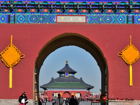
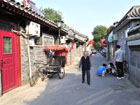
| Today's Activities | After breakfast you’ll head for Temple of Heaven where the Emperor of the Ming and Qing dynasties(1368-1911) would worship heaven and pray for good harvests around the kingdom. Here you would have an eye-opening understanding of Oriental architectural aesthetics and the deeply rooted awe of heaven in ancient Chinese, from the emperor to the masses. You may have chance to see the locals doing morning exercise, playing Tai-chi or sword in the big park. Later let’s leave the blocks of royal buildings for the populace culture that hide itself in the Hutong. Taking a rickshaw tour through these narrow alleyways, you’ll be impressed with the simple happy kids, the old enjoying their leisure time under the tree, exquisite old quadrangles, delicious sugared plums and all kinds of Beijing snacks at roadside peddlers. Plus, in a friendly family in the Hutong you’ll enjoy the most authentic Beijing cuisine with them. You may optionally experience how the delicious dumpling is made. After the lunch, you’ll move on to Beijing Railway Station and take the soft-sleeper train for Datong City. Upon your arrival, you’ll be picked up and transferred to the downtown hotel. |
||||||||||||||||
| Highlights |
|
Day 5 Datong ( Breakfast, Lunch )
| Today's Activities | Drive 70 km and you look up to the over-1,500-year-old Hanging Temple that fast fastens itself to a near-vertical cliff, you may shiver with fear. Beneath the temple are a dozen of wooden pillars that appear to be supporting the temple from falling apart, actually you’ll soon discover that the safety of the temple has little to do with these pillars. It is said that the architects added the pillars to strengthen people’s confidence in walking through the temple. Enjoy visiting the temple and see how human intelligence can get! End the thrilling Hanging Temple tour and drive back to the downtown Datong to have your lunch. After that you’ll head for the World Heritage, Yungang Caves. The tremendous caves, one of the four Buddha caves in China, sports as many as 45 main caves and over 51,000 statues. Whatever size they come with, from the gigantic Buddha statues that front you at the cave entrance to the pocket statues inside, they are drop-dead gorgeous. Look what they’re doing- flying in mid air playing with Chinese lute, beating the drum, dancing to the rhyme of the royal band, etc. You may feel as if you were watching an amazing circular-screen movie that shows you both the Buddhist and worldly ways of life in China during 5th -6th Centuries. About 2 hours later, you’ll go back to downtown Datong. |
||||||||||||||||
| Highlights |
|
Day 6 Datong - Pingyao: See-off, pick-up, check-in and free-time activities ( Breakfast ) Transfer by train
| Today's Activities | After a breakfast at the hotel, you’ll take the train to Pingyao from Datong. With railway station pick-up and hotel transfer, you’ll spend the rest of the day as you like. You can either enjoy staying at the cozy and vintage featured hotel or go strolling around Pingyao Ancient City. That’s lots of fun. Look, almost all the shops are decorated in old fashion and everything that hits your eyes is of traditional Chinese touch - Red lanterns, red paper cuts, opera facial makeups, sidewalk restaurants sell traditional Pingyao diet and bars playing poetic Chinese ancient music. If you're lucky, you would watch a night watch stroll past you sounding night watches! | ||||||||||||||||
| Highlights |
|
Day 7 Pingyao ( Breakfast, Lunch )
Today's Activities |
Today let's make an excursion at the outskirt of Pingyao. The first attraction is the 1,400-year-old
Shuanglin Temple, the treasure house of Oriental Painted Sculptures. Your eyes will be dazzled by the sea of colorful and expression-rich Buddha sculptures. Then you would head for Wang Family Compound. The residential complex whose owner is the wealthiest family locally, is honored as the Forbidden City in Shanxi Province or the folk Forbidden City. Keep your eyes sharp or you’ll soon get lost cause the enormous labyrinth world boasts 123 courtyards and an astonishing total of 1,118 rooms! Apart from the spectacular layout, you can further enjoy the sumptuous details of carving and embossing on the pillars, eaves, walls, windows and doors…Finishing the incredible architecture appreciation, you’ll be back to Pingyao Ancient City and have free-time activity. |
||||||||||||||||
| Highlights |
|
Day 8 Pingyao - Xi'an: See-off, pick-up and check-in ( Breakfast, Lunch ) Transfer by train
Today's Activities |
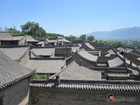
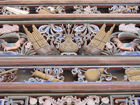
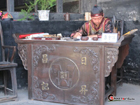
Today is all about Pingyao Ancient City, the whole set of which is ranked as World Heritage! Beginning with the most buoyant Mingqing Street, the old town has its vintage buildings parade past you. Though these houses appear more or less the same, they shadow their internal contents which are sharply different from each other. The Government Office of Pingyao (Xianya in Chinese) is totally feudal, there you can have a view of how the ancient county magistrate hears a civil case (Performed by costumed actors). However, when turning to the nearby Rishengchang Exchange Shop, the best-known capitalistic banking company that once dominated the banking industry of China for decades (1824-1914), you would fall lost before the sophisticated system of draft exchange. In keen contact with the exchange shop is the Ancient Security Guard Company (Biaoju in Chinese) that played as the property supercargo. Stepping into the deep courtyard of the Biaoju, you will find a complete series of cold weapons – spears, swords, sticks, hammers, bows and arrows. It was with these old-fashioned weapons and one-wheel escort vehicle that the tons of money and treasury of the exchange shop made it to the destination safely. At dusk, you’ll have a panoramic view of the time-honored ancient city on the lofty Ancient City Wall of Pingyao. Trust you to have lots of thoughts and sighs to let out. Having finished the impressive tour around Pingyao, you’ll move on to Pingyao Railway Station and take the soft-sleeper train for the most historic city Xi’an. |
||||||||||||||||
| Highlights |
|
Day 9 Xi'an ( Breakfast, Lunch )
Today's Activities |
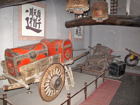
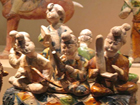
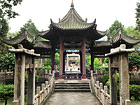
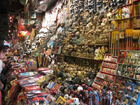
The night train will reach Xi’an Railway Station around 7:00 A.M. Then you’ll be transferred to the hotel and spend the rest of the morning as you please. After lunch the exciting tour of Xi’an starts with a visit of Shaanxi History Museum. Every antique displayed there, ranging from the eroded bamboo stroll to the well-kept glaze ceramic (Tangsancai), is able to provide strong statement of the vibrant civilization of ancient China. The then capital city of Tang dynasty Xi’an was known for its generosity towards various religions. People with totally different beliefs lived happy together at that time. The next stop Great Mosque sports more than 1200 years' history as one of the four grand Islamic mosques in China. It will let you see how Muslim architecture and Chinese traditional buildings light up each other. As to the Muslim Quarter, it is a big stock of exotic souvenir markets and savory restaurants.. You may as well have a supper and some shopping around. |
||||||||||||||||
| Highlights |
|
Day 10 Xi'an - Luoyang: See-off, pick-up and check-in ( Breakfast, Lunch ) Transfer by train
Today's Activities |
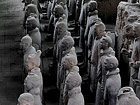
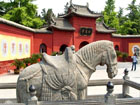
No matter how many times you view the Terracotta Warriors via television or pictures, you would fail to describe the invincible vigor they give off when you’re finally face-to-face with them. You’ll have a feast on the gorgeous arrays of terracotta warriors at pit 1, 2 and 3 along with groups of ancient bronze chariot s and horses after you establish some impression of the great works by watching a circular-screen movie. The eighth world’s wonder never lets you down! After having lunch at the restaurant within the scenic spot, you will be transferred to the Xi’an North Railway Station heading for Luoyang Railway Station. About 1.5 hours later you’ll set foot in Luoyang, one of the four ancient capitals in China. Having settled your luggage at the hotel, you’ll pay a visit to the nearly-2,000-year-old White Horse Temple (Baima Temple), the first official Buddha temple in China. The year 68 A.D. witnessed that the then emperor of Eastern Han Dynasty himself gave a grant welcome ceremony to two eminent Indian monks and the Buddhist scriptures and sculptures they brought via white horses, after which the temple was named. You’ll marvel at the magnificent main halls and the No. 1 Buddha stupa in China at the time-honored temple. Since finishing the tour of White Horse Temple, you’ll move on for Luoyang Museum of Ancient Tombs, another historic cultural treasury of the imperial city. You’ll have your eyes wide open before the incredible display of the layout, sculptures of mythical beasts, especially the abundant burial accessories like tomb figures. Moreover, you’ll give out lots of sigh with the extravagant funeral procession of ancient Chinese emperors and royals, which is illustrated by rich pictures and models in the great theme museum. |
||||||||||||||||
| Highlights |
|
Day 11 Luoyang ( Breakfast, Lunch )
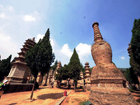
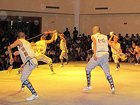
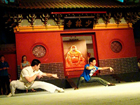
| Today's Activities | After breakfast you’ll go visit the 1,500-year-old Shaolin Temple. You’ll tour straightly the Pagoda Forest in the rear of the temple. Present is a stunning forest of pagodas (232 pagodas in total!) in memorial of the prominent monks who spent their lives in Shaolin Temple and won honor for the temple. The oldest two pagodas can date back to Tang Dynasty(618-907) and all of them mirror various architectural styles in as many as 5 significant dynasties in China. To understand why the temple has survived centuries of turmoil, you’re arranged to appreciate the wonderful Kungfu show performed by the warrior monks. Look how they box, smash bricks and handle assorted arms like spear, cudgel, rope, sword, etc, you’ll be deeply impressed. If you have special interest in Kung-fu, you can optionally learn it from these strong warrior monks within 1 hour. After the show you’ll be back to downtown Luoyang. |
||||||||||||||||
| Highlights |
|
Day 12 Luoyang - Shanghai: See-off, pick-up, check-in and free-time activities ( Breakfast ) Transfer by air
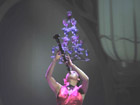
| Today's Activities | Having feasted a good breakfast at the hotel, you’ll say goodbye to Luoyang and take flight towards Shanghai. After airport pick-up and hotel transfer, you’ll have the rest of the day as your free time. It’s quite regrettable to let go of the colorful Shanghai nightlife. You can optionally go enjoy Shanghai Acrobatic show. As one of the oldest performing arts in China, the acrobatics displayed on stage include a number of feats focusing on flexibility, strength, endurance and sheer will-power. Cheer up your bravos! Or you can simply visit Xintiandi Bar Street to feel the vibrant night color in Shanghai and romantic tone that prevails the whole street. | ||||||||||||||||
| Highlights |
|
Day 13 Shanghai ( Breakfast, Lunch )
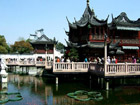
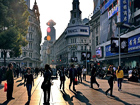
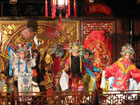
| Today's Activities | After breakfast you’ll launch the whole day tour from the old town to the brand-new area of Shanghai. You start with the over- 400-year-old Yuyuan Garden to appreciate the elegant pavilions, villa, lotus pond and bridges, especially the Mid-Lake Pavilion. Then move to the neighboring Yuyuan Market to explore how elaborate and cute the traditional Chinese handicrafts and art works are. at the 600-year-old City God Temple you’ll see scores of statues that represent this or that powerful Taoist immortal. Besides, you can have a taste of the delicious snacks at the famous snack square of the temple. Strolling along this 1,599-meter-long Nanjing Road is much like being immersed in seas of garment, shoes, jewelry, accessory, snack and souvenir. The pedestrian street leads you to The Bund. Here you can embrace the best cityscape, feast on the rich architectural fashions (Gothic, Baroque, Rome, Renaissance, Classic and Mixed Eastern and Western style, etc.) Finishing the historic part of Shanghai, you will steer to the new landmark Oriental Pearl Tower. On the ground floor, you’ll first visit Shanghai Municipal History Museum. The Museum shows you a vivid panorama of Shanghai’s development. The part of old Shanghai life during 1920s to 1940s is the most attractive. Then you’ll be elevated to the top of Oriental Pearl Tower. At the height of 468 m (1,535 feet) you’ll enjoy a bird's eye view of this vibrant city. |
||||||||||||||||
| Highlights |
|
Day 14 Depart Shanghai : See-off at airport ( Breakfast )
| Today's Activities | This is the last day of your tour, you can have free activity in Shanghai, shopping or have a rest, and later the tour guide will take you to airport for your flight to next destination. Wish you a happy journey! |
Package Details
 Tour Package Includes: Tour Package Includes: | |
 Dining: 13 breakfasts and 10 lunches. Dining: 13 breakfasts and 10 lunches. |
Admissions: Entrance fee to all scenic spots listed in itinerary |
| Train, Flight Tickets: all listed in itineraries; |
Hotels: accommodation in mentioned cities; |
| Tour Guide: a local experienced English-speaking guide |
Car Driver: an experienced licensed driver |
| Vehicle: a private air-conditioned car, offering Round-trip transfers |
Luggage Transfers: a hand for your heavy luggage; |
| Insurance: Travel Agencies Liability Insurance; |
Government taxes & Service charges |
| Tour Package Excludes: | |
| - Other optional attractions / tours / meals and international flights; | - Tips for tour guides and drivers. |
Hotel in Beijing
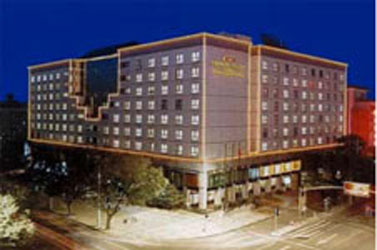
- Crowne Plaza Hotel Beijing

- Located in the golden business area of Wangfujing, the hotel only takes 10 minutes to Forbidden City and Dongfang Square. With stylish guest rooms and newly renovated Crowne Plaza Club floor – Crowne Plaza Beijing has anticipated every need while providing easy access to business, commercial districts and historical landmarks.
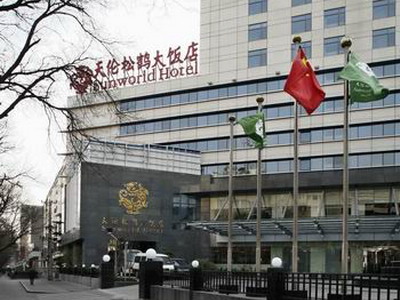
- Sunworld Hotel Beijing

- Situated on the intersection of Wangfujing Avenue and Dengshikou Street, Sunworld Hotel Beijing is close to many famous historical and cultural landmarks, including the Forbidden City. Guest rooms and suites are designed with a traditional and refined style. From servies to amenities, the hotel strives to make your stay a pleasant experience.
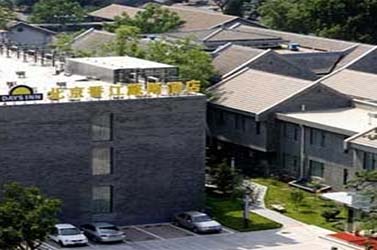
- Days Inn Forbidden City Beijing

- With its courtyard style, the hotel has retained its charm of the ancient time but as well merged in contemporary architecture and designs. The hotel is near the famous Tian’anmen Square and Wangfujing Business Street. It takes about 20 minutes from Capital International Airport (24km) and 5 minutes from Beijing Railway Station (3km). The hotel provides guests clean and comfortable service and amenities.
Hotels in Datong
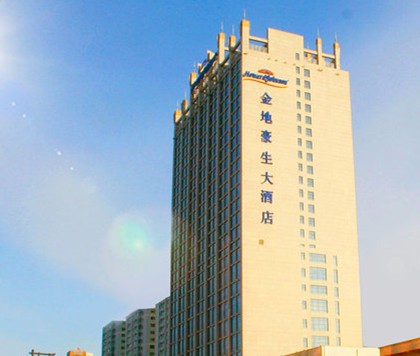
- Howard Johnson Jindi Plaza Datong
- Howard Johnson Jindi Plaza Datong is located at the city center, with easy traffic access. The hotel offers a large variety of dishes. There are 25 dinning halls. Following its high level features, the western restaurant offers creative dishes based on traditional French cuisine, and is decorated in a neo-romanticist style, perfectly matching the food served here. Bars, Japanese and Korean restaurants are available.
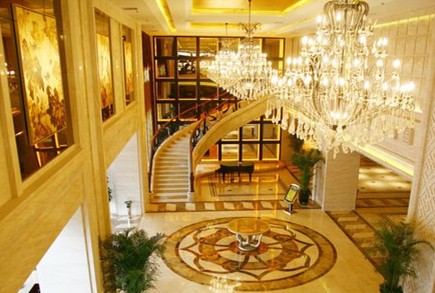
- Great Palace Hotel Datong
- Great Palace Hotel Datong is situated in ust 10-minutes from Datong railway station and only 20-minutes from the direct Beijing-Datong express freeway. The hotel combines an elegant traditional interior design with very modern guest facilities. The hotel provides 98 comfortable guestrooms. All rooms are equiped with facilities such as IDD telephone connections, satellite television and Mini-bar service.Each room is decorated with traditional room amenities and around-the-clock service.
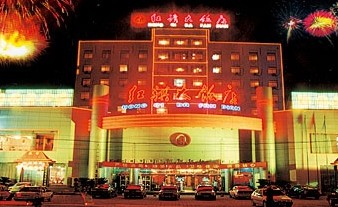
- Hong Qi Grand Hotel Datong
- Hong Qi Grand Hotel is with a capacity of 170 rooms provides a whole chain of accommodation, entertainment, dining, and shopping for business people as well as tourists. There are total 138 well equipped and comfortable guest rooms. The hotel has Chinese and western restaurants and is beautifully decorated and equipped with modern facilities that will make your stay as convenient and comfortable as possible. The hotel also provides car rental and ticket reservation services.
Hotels in Pingyao
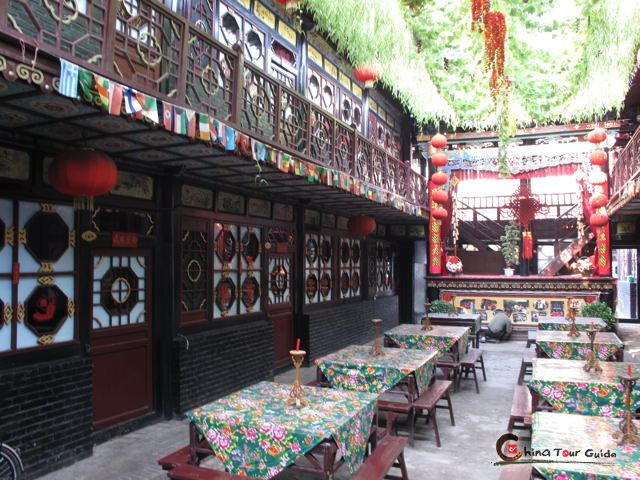
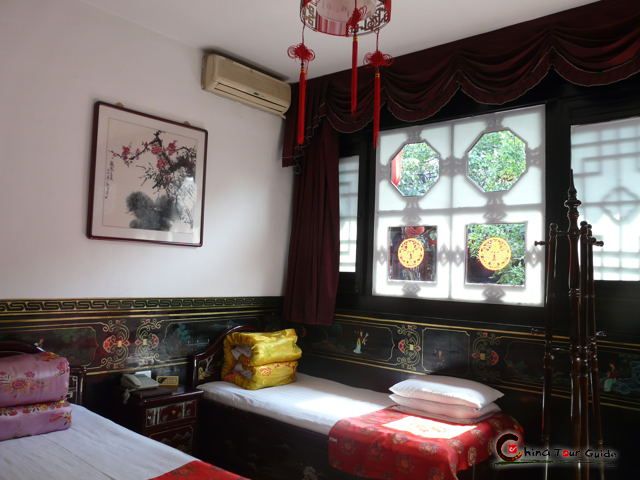
- Yunjincheng Folk Hotel Pingyao
- Yunjincheng Folk Hotel Pingyao adorns itself up with all the featured ingredients of traditional Pingyao dwellings like red lanterns, folding screens with Chinese ink painting, rosewood furniture and sophisticated courtyard layout. Moreover, even the beddings in each room are of traditional tone. Hot water and tasty local dishes are all available to serve you too.
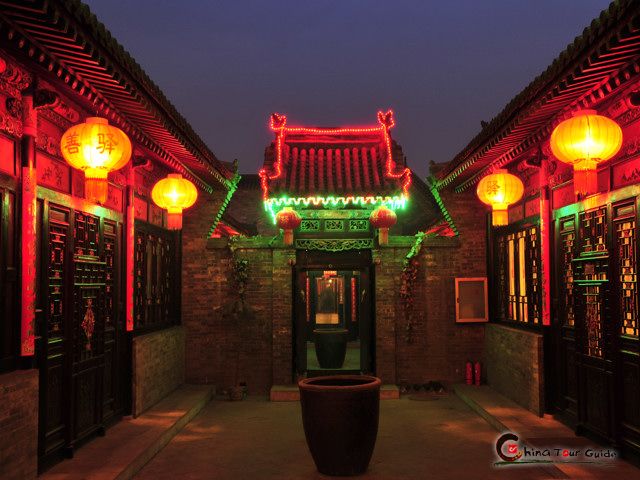
- Hongshanyi Hotel Pingyao
- If you spend a Chinese Spring Festival in Hongshanyi Hotel, you will have a lot of fun, taking part in the celebrating activities the hotel holds for you. You can either DIY some handicrafts like paper cut, writing spring festival couplets or watch outdoors the dazzling lantern show, firework.
- Dejuyuan Guesthouse Pingyao
- Dejuyuan Guesthouse Pingyao is situated at Mingqing Street. The tastefully decorated guest rooms and a wide range of facilities and services provide guests with a comfortable and joyful stay.
Hotel in Xian
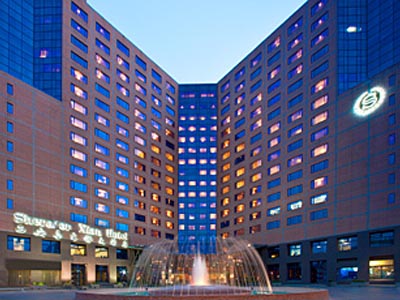
- Sheraton Hotel Xi'an
- Located near the 600-year-old City Wall and close to the city centre, Sheraton Hotel is just 35 minutes from Xi’an Xianyang International Airport. With first-class amenities, facilities and family-friendly services, Sheraton Xi’an Hotel will make you feel at home.
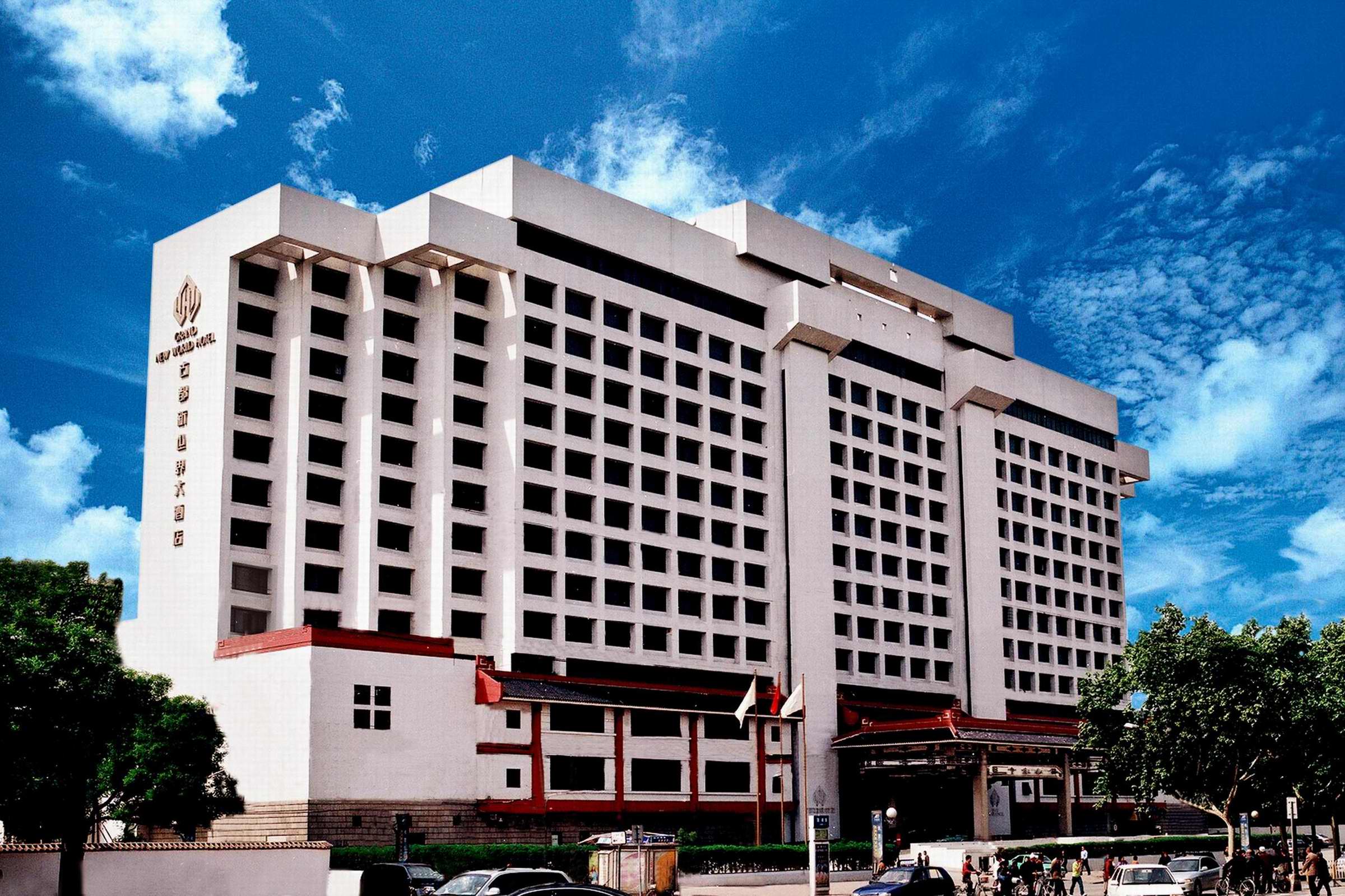
- Grand New World Hotel Xian
- Located within the Ancient City Wall and styled in an extraordinary mix of tradition and modernity, the hotel is just 4km from the railway station and 45km from Xianyang International Airport. The large Parkson shopping centre is close by, while the Terracotta Warriors Museum is about 35km from the hotel. The hotel provides a satisfying range of contemporary accommodation together with business services and recreational facilities.
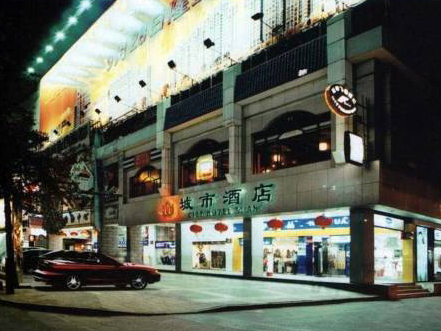
- City Hotel Xian
- The hotel is located in the centre of Xi’an city and just near the well-known Bell Tower, Drum Tower and Ancient City Wall. The hotel offers a total of 137 well-appointed guestrooms for guests’ comfortable living space. The elegant and magnificent restaurants serve delicious flavor of many varieties.
Hotel in Luoyang
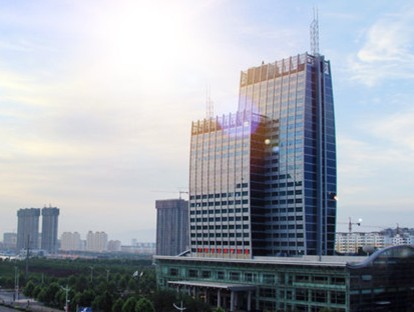
- Lee Royal Hotel Mudu Luoyang
- Lee Royal Hotel Mudu Luoyang is the only 5-star business hotel in Luoyang City. The hotel is located in the prosperous southern part and enjoys convenience in transportation. It’s 15 kms from Luoyang Railway Station and 17 kms from Luoyang International Airport. Open in 2008, the hotel boasts 313 luxury rooms and suites. From the rooms guests can feast on beautiful garden scenery and the famous Music Fountain.
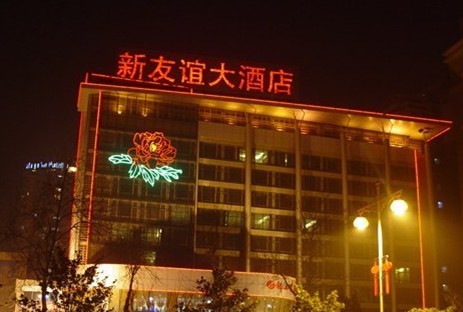
- New Friendship Hotel Luoyang
- New Friendship Hotel Luoyang is a unique 4-star resort hotel themed on Peony, the city flower of Luoyang. The elegant hotel is situated on Peony Square, 15 kms from Luoyang Railway Station and 17 kms from Luoyang International Airport. Renovated in 2011, the hotel now features 136 rooms all of which are linked to the beautiful view of Peony Square. 17 culture restaurants can satisfy all kinds of appetites.
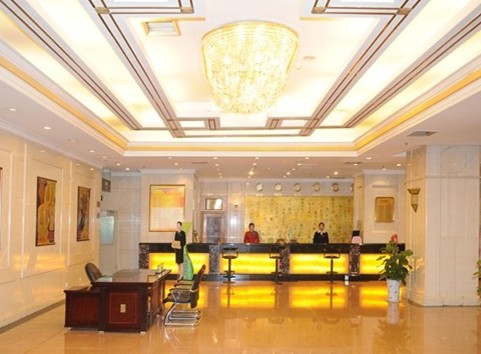
- Aviation Business Hotel Luoyang
- Aviation Business Hotel Luoyang is a 3-star hotel centrally located in Luoyang. It’s only 5 minutes driving to Luoyang Railway Station and 15 minutes driving to Luoyang International Airport. The 27-storey hotel owns in total 199 well-appointed rooms most of which enjoys beautiful external views like Music Square, mountains and Luo River.
Hotels in Shanghai
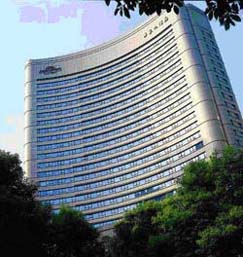
- Howard Johnson Plaza Shanghai
- The hotel is conveniently located in the centre of Shanghai, 2 minutes from Nanjing Road, People Square and the Bund. It offers easy access to the city's most important business, cultural and entertainment hubs. The elegantly designed and tastefully decorated rooms provide you with an experience of exceptional luxury and comfort.
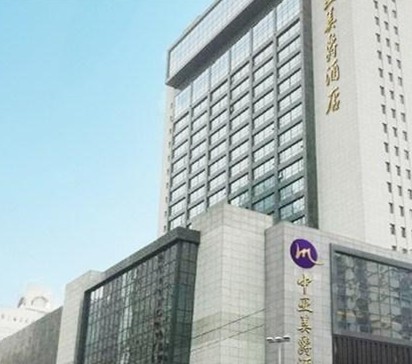
- Grand Mercure Zhongya Hotel Shanghai
- Grand Mercure Zhongya Hotel Shanghai is an international 4-star business & leisure hotel located next to Shanghai Railway Station. The hotel is within 2 minutes walking from Shanghai Railway Station and entrance of Shanghai Metro. The famous attraction nearby is Jade Buddha Temple. Open in 2010, the new hotel boasts 288 rooms /suites that come with French styled decor and rich facilities.
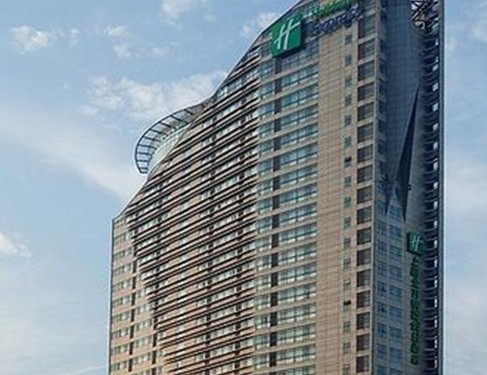
- Holiday Inn Express Shanghai
- Holiday Inn Express Shanghai is a 3-star business hotel. The hotel enjoys much transportation convenience. It's within walking distance to the Shanghai Metro Line 3 and Line 4 Shanghai Circus World Station. Open in 2008, the hotel boasts a total of 472 rooms /suites. Most rooms enjoy as spacious as 32 square meters and comfortable bedding.
Overview
- Breakfasts are offered by hotels;
- Lunches are supplied according to different classes of tour;
- Dinners are for your own arrangement.
We promises no worries about the dining quality, plus flexible choices that you can have depending on your preference. If having any special requestment, just tell our trip advisor directly. In all, we aim to satisfy your tongue and stomach with our recommendation as follows:
Beijing
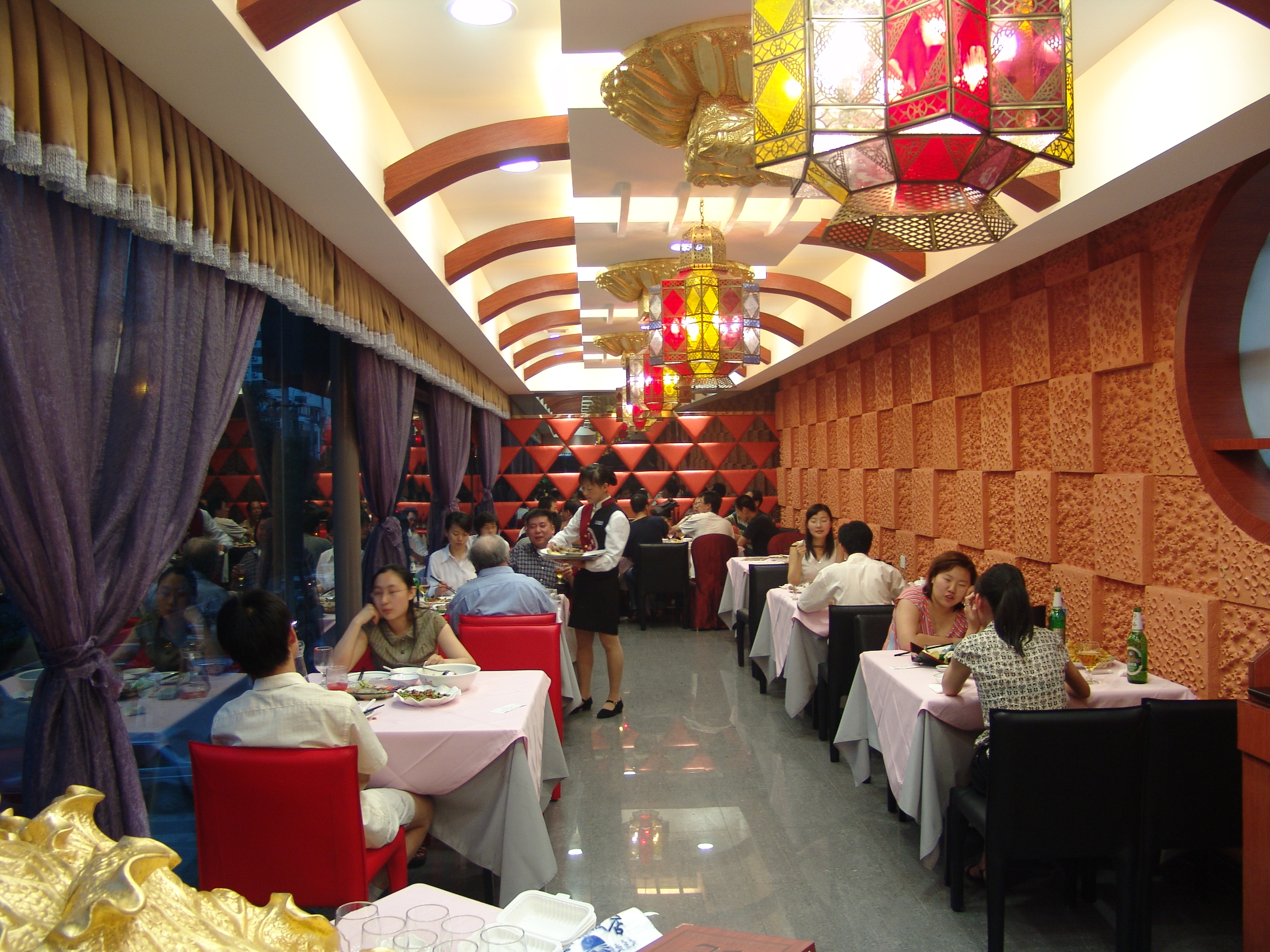
As the capital of China, Beijing boasts many good restaurants with featured cuisines. Our package takes you to have A La Carte dinner at Great Northeast Restaurant, Gold Palace Restaurant and Tang Yuan Restaurant, leading you to grasp the essence of Chinese classic cuisines.
 |
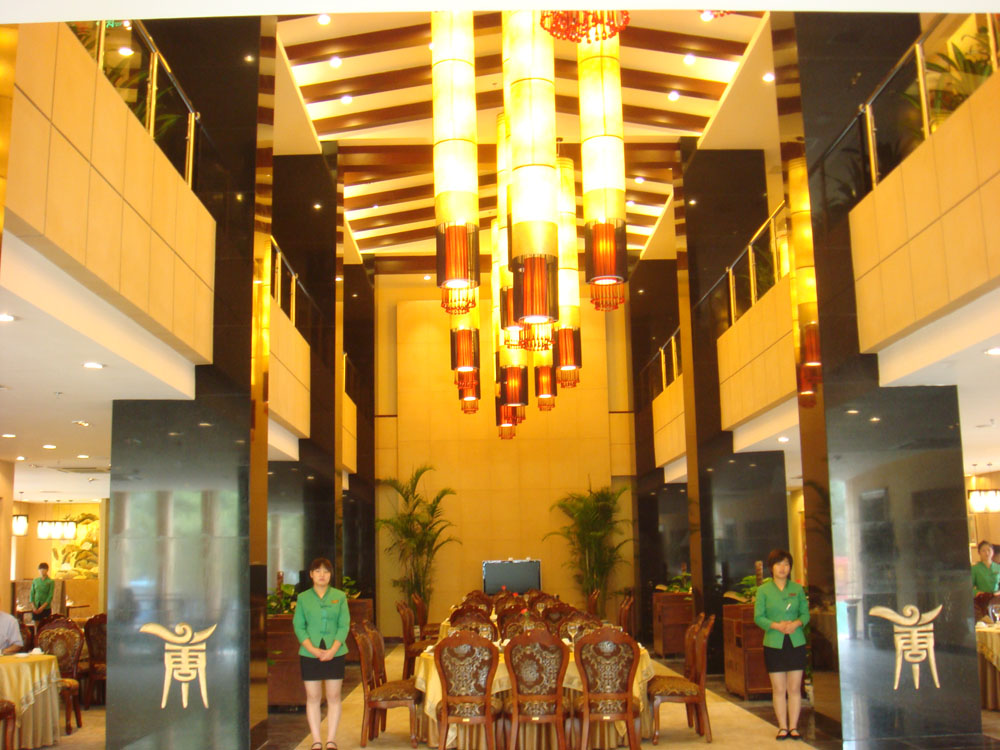 |
| Dining Hall of Great Northeast Restaurant | Main Hall of Tang Yuan Restaurant |
Shanxi ( Datong and Pingyao )
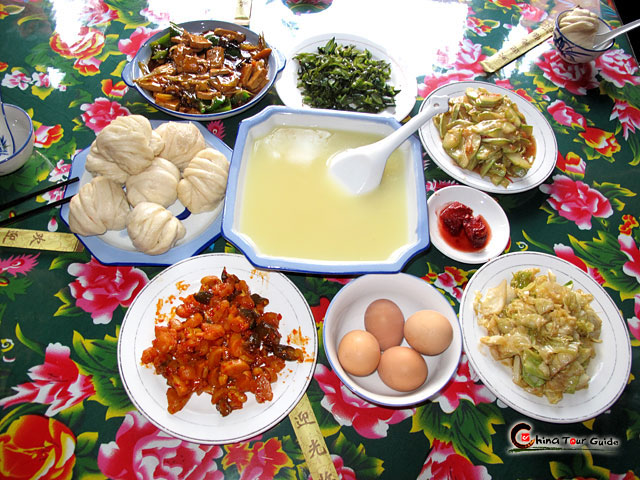
China serves the best flour food in the world; and it is said that Shanxi ranks first in China in preparing flour food." Shanxi Province boasts nearly 1,000 kinds of flour food, made of a wide variety of materials. Shanxi flour food may serve as staple food, snacks or art works. Besides, you could taste other famous dishes and snacks in Datong and Pingyao as you prefer.
 |
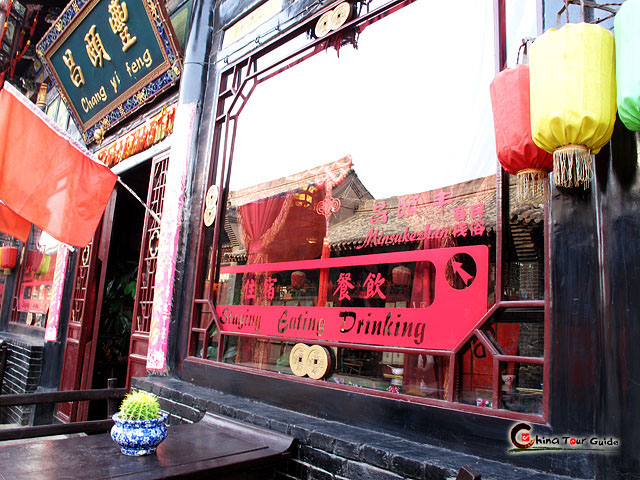 |
| Classical Meal in Shanxi | You can taste many delicious food in Mingqing Street. |
Luoyang
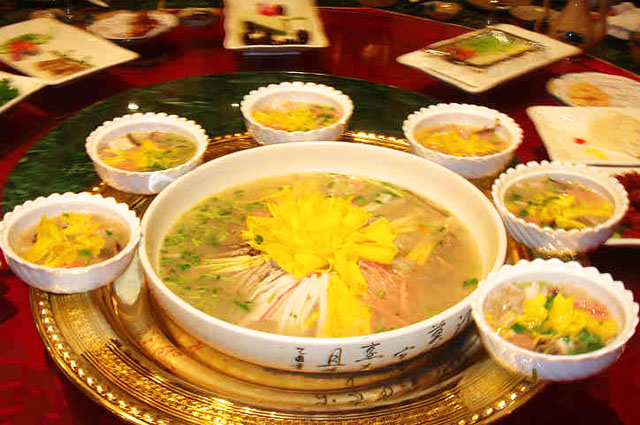
Luoyang cuisine is a little bit like that of its neighbor Shanxi. Sour and spicy are the two most impressive words to describe Luoyang food. However, Luoyang boasts some featured meals like Soup banquet and Hot & Sour Rice Noodles.
 |
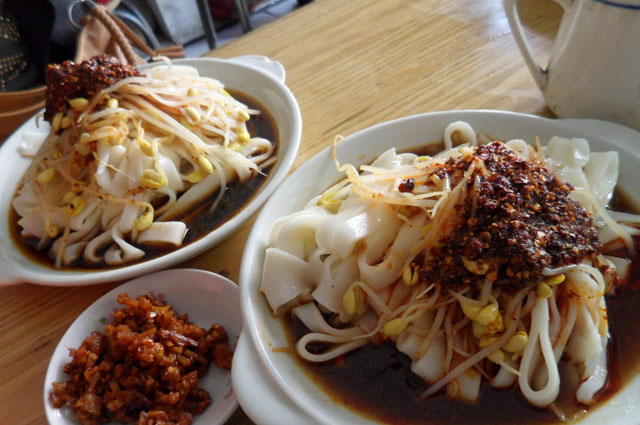 |
| Luoyang Soup Banquet | Hot & Sour Rice Noodles |
Xi’an
Xi'an features distinctive cuisines of China Northwest, such as various-shapes chinese dumplings and other wheaten food. At Muslim Quarter, where gathers lots of delicious local food, like Rou Jia Mo and shish kebabs, etc.
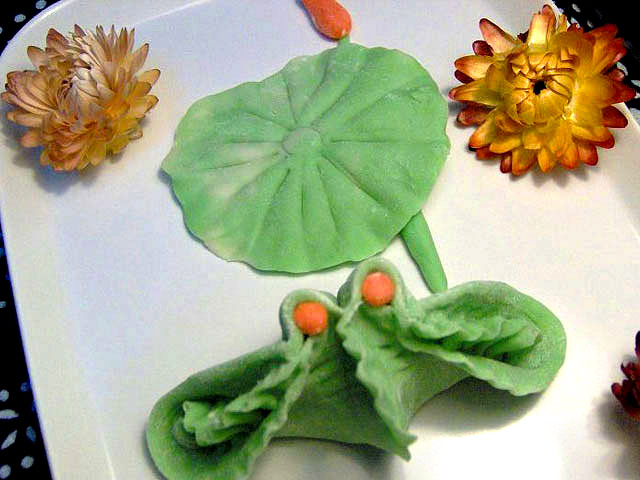
(1) Here we highly recommend Chinese Dumpling Dinner, which also named Jiaozi, typically consist of a ground meat and/or vegetable filling wrapped into a thinly rolled piece of dough, which is then sealed by pressing the edges together or by crimping. As a must-try for visitors, it serves with Tang dynasty show. And it belongs to an [add on] item in the tour.
(2) Rou Jia Mo, also called Chinese Hamburger, is very similar to the Western hamburger essentially, but with different cooking method.
 |
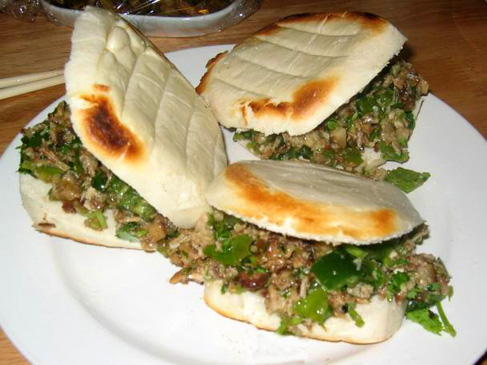 |
| Chinese Dumpling Dinner | Rou Jia Mo ( Chinese Hamburger ) |
Shanghai
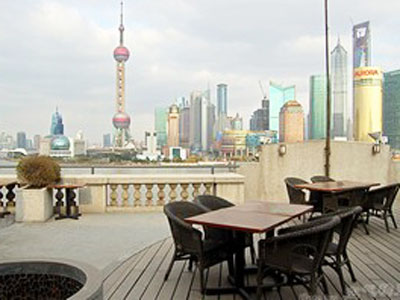
We say little about the dining in Shanghai, since Shanghai is regarded as a delicious kingdom, where you can taste everything almost. Here we strongly suggest you take M on The Bund into consideration.
M on the Bund Shanghai
-- Dedicated to creating a dining experience as exciting, as sophisticated, as delectable as Shanghai itself
-- “One of the top 20 restaurants in Asia” (Miele Guide, 2009-2010)
-- “Best Global Cuisine” (City Weekend Readers’ Choice Awards, 2010)
-- “M on the Bund: Most Popular Restaurant in Shanghai” (Zaqat Survey Shanghai, 2008)
 |
 |
| Shanghai M on The Bund Restaurant | Brandboard of M on the Bund |
Your Add On:
Comments
Customer: Mr. Winston
Destinations: Beijing - Datong - Pingyao - Xi'an - Luoyang - Shanghai
Related Tour: 14 Days Imperial Cities Tour
Customer: Mr Mofey
Destinations: Beijing - Datong - Pingyao - Xi'an - Luoyang - Shanghai
Related Tour: 14 Days Imperial Cities Tour; 14 Days China Culture Explosion Tour