

Local Beijing Tours
Tour Tips
Quick Enquiry
| Follow Us and Share on: |


 |
Beijing Transportation
Beijing City Planning
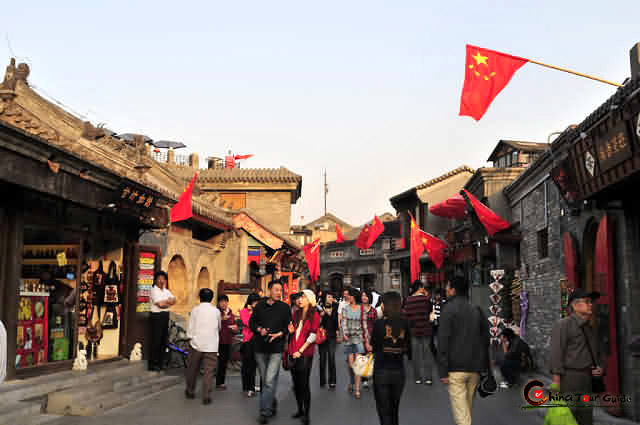
The city limits of Beijing stretches some 80km (50 miles), including the urban and suburban areas --in other words, it's huge! Though visitors may at first feel confused, Beijing is actually designed very orderly. Long, straight boulevards and avenues are crisscrossed by a network of lanes. Most of the major attractions are located on the broad avenues and very easy to locate; some, however, are buried deep in the hutong alleyways are are almost impossible to find without a guide.
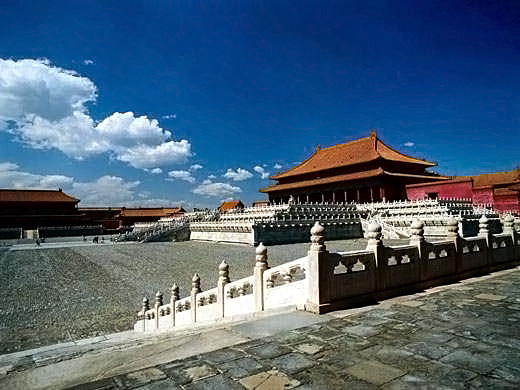
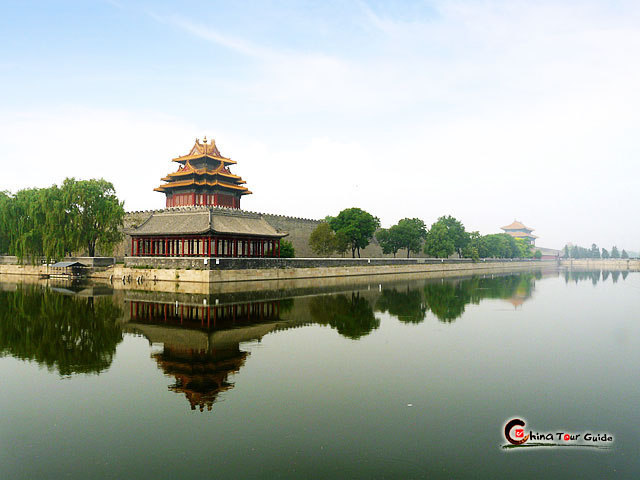
When viewed from above, The Forbidden City is like a bull's-eye, surrounded by a network of roads, including five ring roads which cup the city centre in concentric circles. The First Ring Rd is a mapmaker's fiction and just part of the grid around the Forbidden City. However, the 2nd, 3rd, 4th, and 5th are multi-lane freeways. Roughly within the Second Ring Rd are the four central districts: Xicheng, Dongcheng, Chongwen and Xuanwu. Outside the Second Ring Rd are the so-called 'suburban' (now urbanized) districts of Chaoyang (east), Fengtai (southwest) and Haidian (northwest). Then there are the "villages". Beijing was once surrounded by many tiny villages, though over time these have in fact become neighborhoods within the metrapolis.
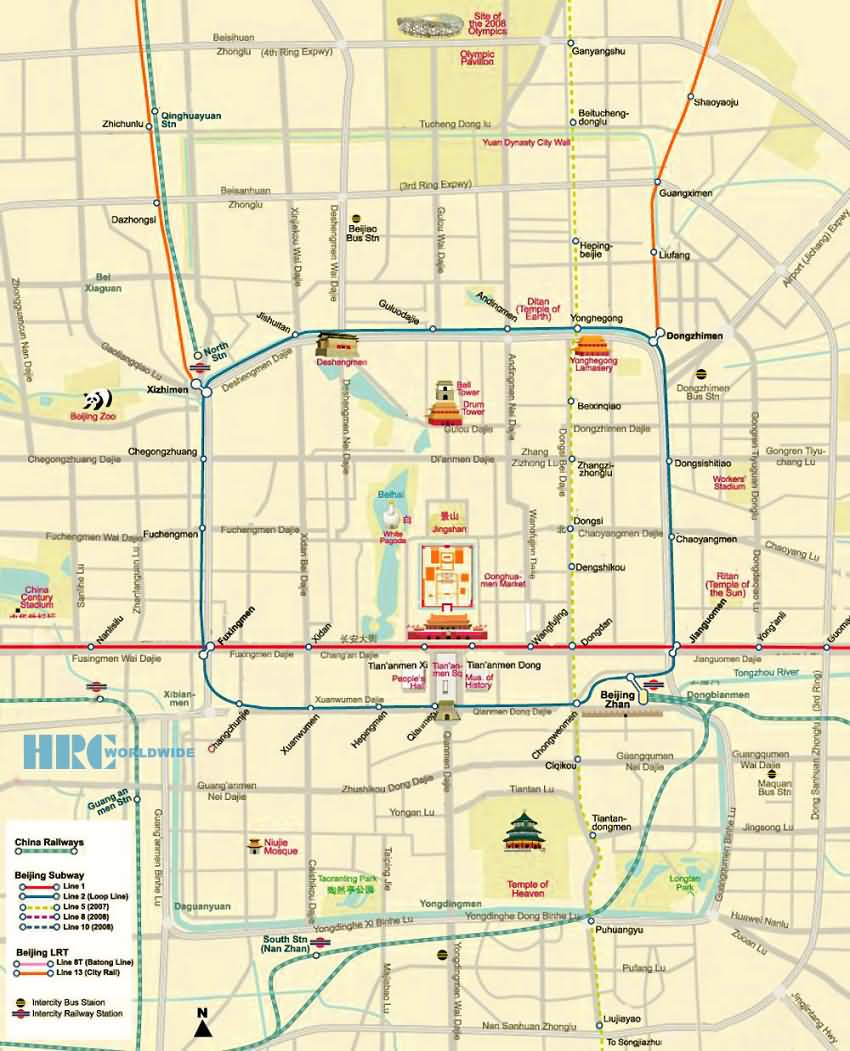
Beijing Urban Transportations
| Overview | By Subway | By Taxi | By Bike |
Overview
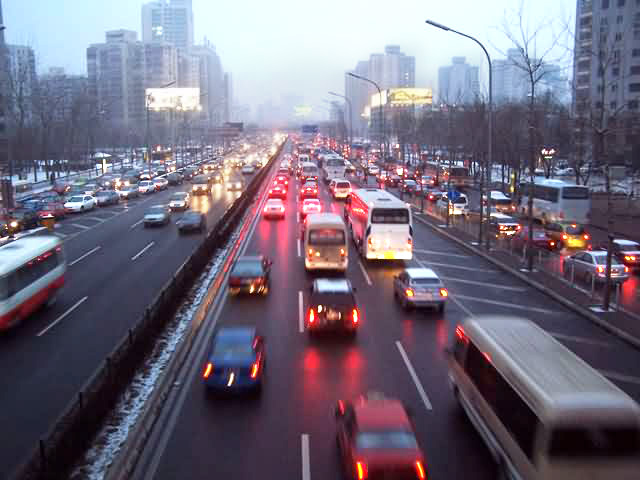 Beijing's traffic congestion is widespread. Traffic in the city centre is often gridlocked and is only predicted to get worse as the number of vehicles on Beijing's roads increase. Therefore the best and the most economical way to travel around Beijing is by subway.
By Subway
By the year of 2013, there are totally 15 subway lines in Beijing. The four central subway lines - Line 1, Line 2, Line 4 and Line 5, cover almost all the major attractions in Beijing.
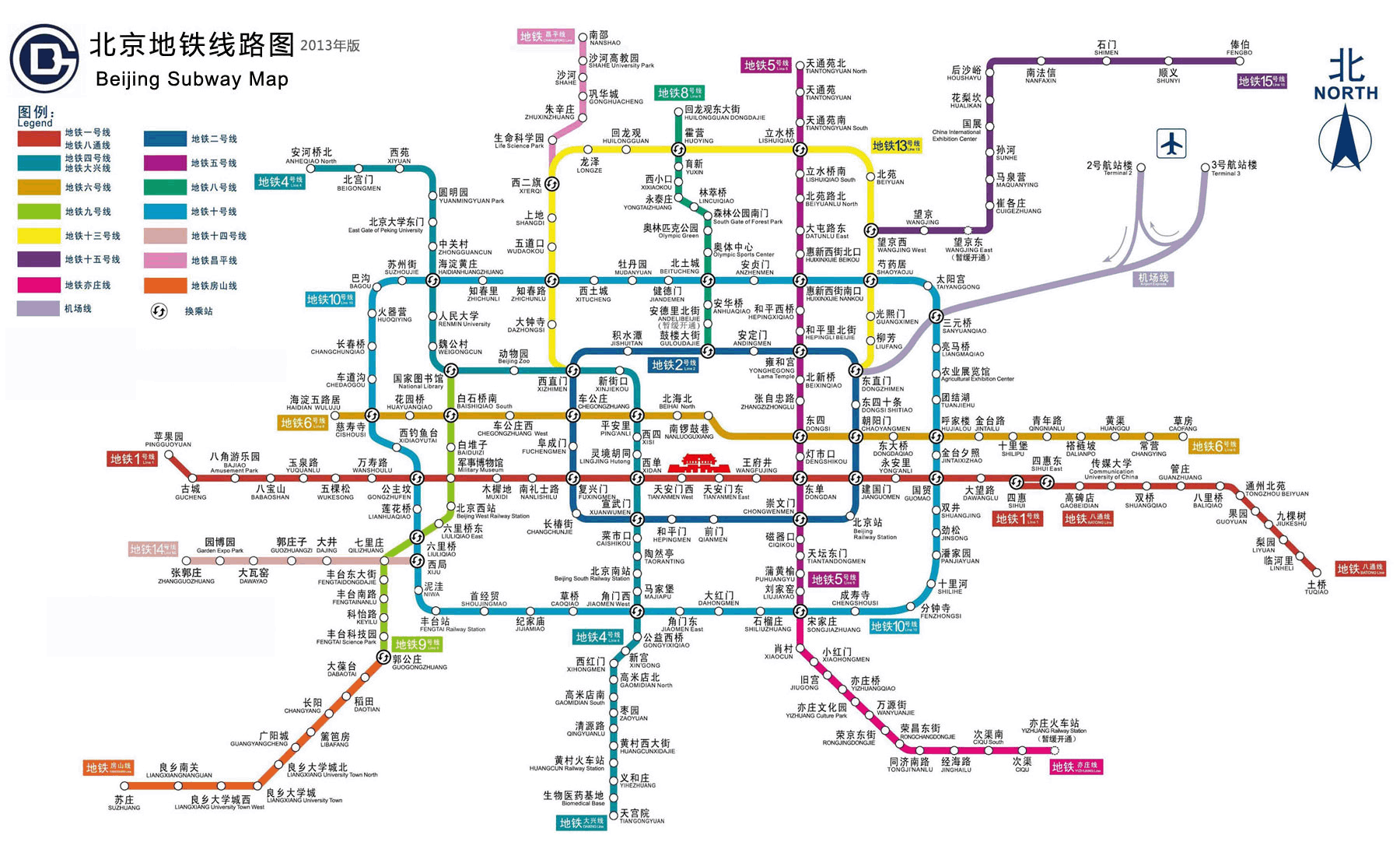 |
Click the map for more details, kindly note that: the shining stars marked on the big map stand for major destinations of our following subway tours. |
By Taxi
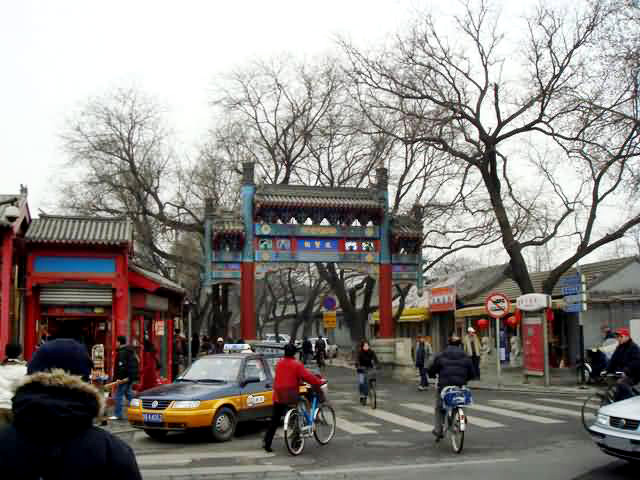 The present taxi number in Beijing is barely enough for the increasing public needs. Most of the taxi drivers can speak little English, you are advised to keep the name of your hotel written in Chinese or you may ask your hotel staff to write it down for you. So you are able to show it to a driver. All legitimate taxis in Beijing use meters, so just get in the taxi and pay the fare when you get out. To advoid possible dispute, you are advised to take receipts which will be printed automatically for you.
By Bike
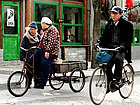 Riding a bike through the streets of Beijing is a good way to see the city. You can leisurely cycle from sight to sight, stop for a local lunch, explore old alleys (hutongs) and become one with the Chinese in the bike lane. People chat as they biking, carry oversize loads and you'll even see arm-powered cycle wheelchairs. Traffic jams will have little effect on you. Biking is not just a way to get from one place to another but also an eye into the minds of local people. Cycling in Beijing you sense the mood of those with who you share the road. In general its entertaining and a great way to explore the corners of Beijing and possibly meet some local people.
Beijing Local Tours
 from $50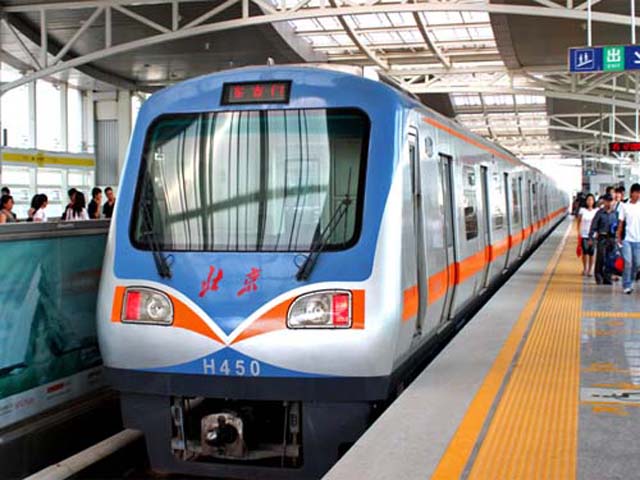
 from $219

 from $314


Guide for China tour, offers most value & amazing experience. In China, you can rely on us
Copyright © 2001 - 2026. All Rights Reserved to ChinaTourGuide.Com
Hotel Guangzhou | Guizhou Tours | Hong Kong Hotels | 香港酒店 | 广州酒店 | 广州会议酒店 | Indochina Tour
Guide for China tours, offers most value & amazing experience. Chinatourguide.com. Your reliable China tour agency.