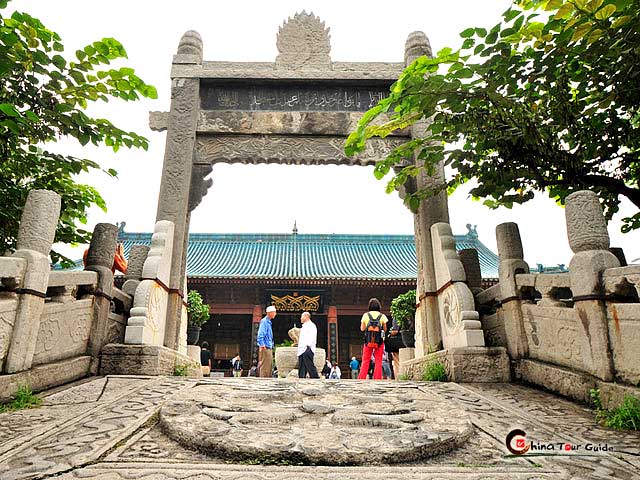
Xi'an, the capital of Shaanxi Province, is the political, economic, and cultural center of Northwest China. 1200 km (745 mi) southwest of Beijing, Xi'an is one of six ancient Chinese capitals, and served as an imperial hub for over a thousand years.
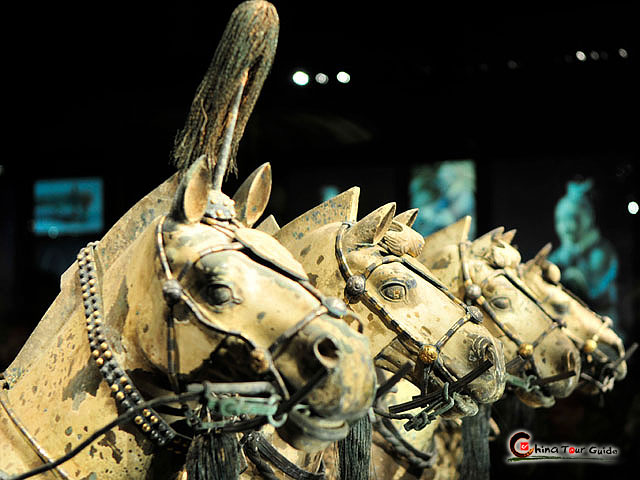
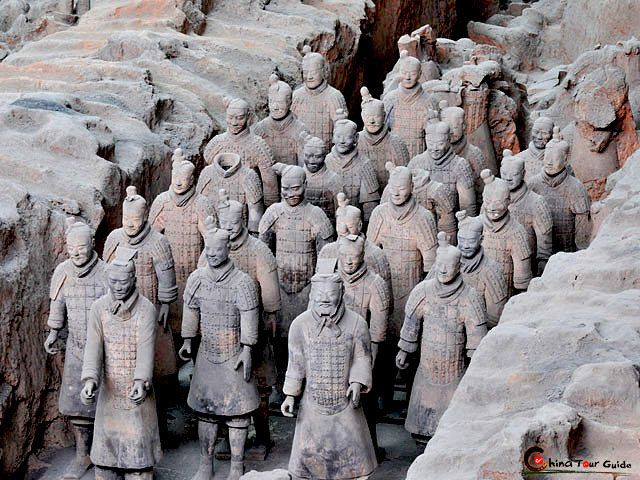
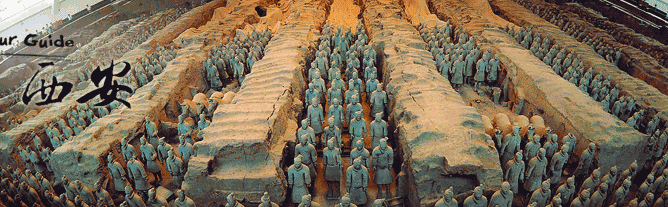
Even before the lives of Christ, Mohammad, and Siddhartha, Xi'an was an excellent city and already influencing the world outside of the Great Wall of China. As the eastern starting point of the Silk Road, traders from far and wide brought goods and ideas for sale and took goods and ideas back with them to their communities. Best known for its ancient historical ruins, museums, cultural relics, and archaeology, Xi'an draws visitors wanting a glimpse of the Middle Kingdom 's long and spectacular history. Absolutely, Terracotta Warriors is the most outstanding one.
Xian's History
As the cradle of Chinese civilizations, Xi'an has a rich and culturally significant history. The Lantian Man dates back at least 500,000 years before present. A 6,500-year-old Banpo Neolithic village is on the outskirts of the city proper.
Xi'an became a cultural and political center of China in 11th century BC with the founding of the Zhou Dynasty (1027 BC-771 BC). Following the Warring States Period (475 BC-221 BC), China was unified under the Qin Dynasty (221 BC-207 BC) for the first time, with the capital located at Xi'anyang, just northwest from modern Xi'an city. The first emperor of China, Qin Shi Huang ordered the construction of the Terracotta Warriors and his mausoleum just east of Xi'an shortly before his death.
In 202 BC, the founding emperor Liu Bang of the Han Dynasty (206 BC-9 AD) established his capital in Chang'an which was built across the river from the ruin of the Qin capital. This is traditionally regarded as the founding date of Chang'an (Xi'an 's ancient name). Two years later, Liu Bang built Weiyang Palace north of modern Xi'an. Meanwhile, the original Xi'an city wall was started in 194 BC and took 4 years to complete.
1000 years later, Xi'an city entered into its great prosperity period and became the largest city in the world during the Tang Dynasty (618-907). In the mid-7th century, Buddhist monk Xuan Zang (Tang Sanzang) established a translation center (i.e. the Big Wild Goose Pagoda) for Sanskrit scriptures when he returned from his pilgrimage to India.
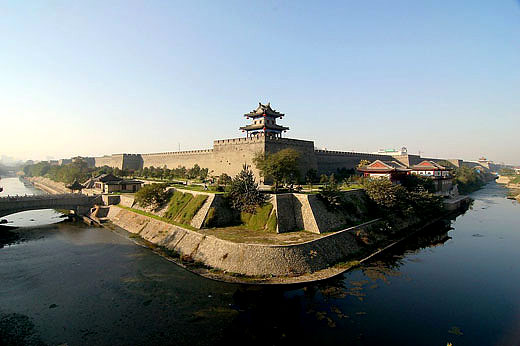
During the Ming Dynasty (1368–1644), a new city wall was constructed in Xi'an in 1370 and remains well-preserved to this day.
|
||||||
|
||||||
|
||||||
|
||||||
|
||||||
>> More China Tours |
||||||
Xian's Transportation
Getting to Xi'an
| By Train | By Air | By Bus |
By Train
Xi'an Railway Station is a vital part of the Chinese railway network, because it is a junction station between eastern and western China. Major destinations include Beijing (11.5 hrs), Shanghai (16 hrs), Guangzhou (22 hrs) and Chengdu (13.5 hrs). The station has a number of services including a foreign friendly ticket office with English speakers. Be advised, that you will need your passport for this. However, the best alternative is to purchase travel tickets in advance, especially during peak season.
By Air
Xi'an 's Xi'anyang International Airport is located 50 kilometers (31 miles) northwest of downtown Xi'an in neighboring Xi'anyang. The airport offers 68 daily domestic flights and 25 international flights to Asia, Europe, Oceania and America and is noted for having the most international connections in Western China. 
There is a shuttle service that departs to and from the city at regular intervals from 6 am to 6 pm. These can be boarded just outside the airport. Taxis are also available. Although taxi 's are not the most economical option (RMB 150—180 to Xi'an), they are the most convenient, will take you directly to the hotel, and may be the only choice after 6 p.m.
By Bus
Xi'an is the hub of an extensive highway system is used by long-distance buses. These commute between Xi'an and many large cities, covering 18 provinces and over 300 cities. Bus is the cheapest way to travel in China, but is also the slowest. The Shaanxi Provincial Coach Station (Xi'an long-distance bus line terminal) is located southwest of the railway station. Most travelers usually buy tickets for the same day, but during peak seasons it is advisable to purchase in advance.
Get around in Xi'an
| By Subway | By Bus | By Taxi | By Bike |
By Bus
It is convinent take a bus in Xi'an city, the bus could reach every attractions you want to visit. For example, Bus 306 to Terracotta Warrior. A one way ticket only costs RMB 8. And the regular buses within the city cost RMB 1 (RMB 2 for air-conditioned, marked with a snow-flake) no matter how far you go.
By Taxi
The rate for the normal (green) taxis is RMB 6 for the first two kilometers and then RMB 1.5 for every additional kilometer. Waiting times longer than 2 minutes will be charged RMB 1.5 per minute. After 11PM the starting price is RMB 7. At the airport and around some of the big hotels you might also find black taxis. They charge RMB 2.4 per kilometer, but are more spacious and comfortable. Especially when you take a longer ride, like to or from the airport, it is always good advice to insist on using the taxi meter.
By Bike
Fortunately Xian's main attractions and scenary (except Terracotta Warriors) are bunched fairly close together, so renting a bike is a good option. Be wary of the narrow streets and cars that squeeze you out of the way.
Xian's Map